Google People Card (2026): Is Add Me to Search Still Available? Best Alternatives for Personal Branding
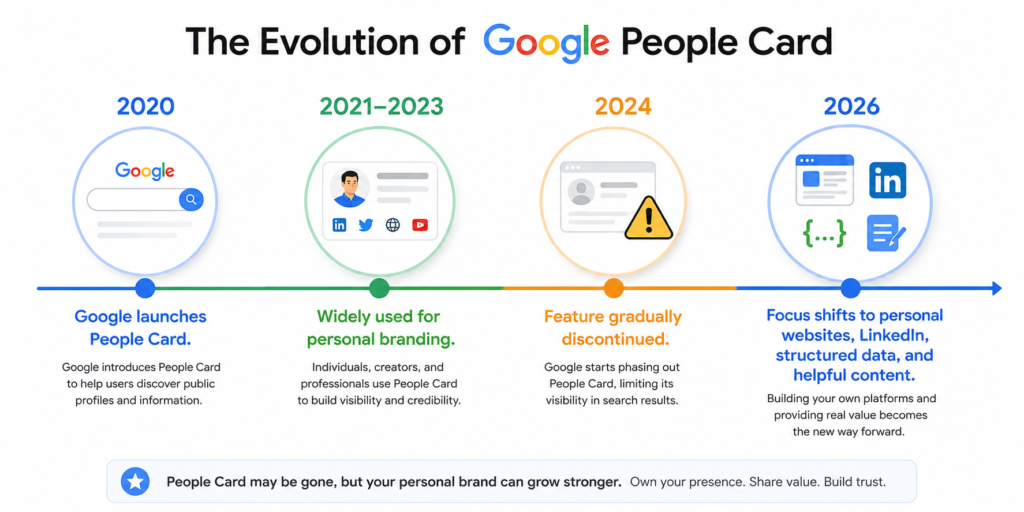
Editor’s Note: Google People Card, also known as Add Me to Search, was introduced to help individuals create a searchable profile in Google Search. Since 2024, Google has gradually discontinued this feature for most users. This guide has been updated for 2026 to reflect the latest changes and focuses on practical alternatives that improve your online visibility and long-term personal branding.
Key Takeaways
Before diving into the details, here are the most important things you should know:
- Google People Card is no longer available for most users.
- Add Me to Search has been discontinued and cannot be created or edited in most regions.
- A professional website is now one of the most effective ways to build your online presence.
- LinkedIn, Google Business Profile, and Person Schema provide stronger long-term visibility.
- Publishing helpful content consistently improves your authority and search rankings.
- Personal branding today depends on trust, expertise, and high-quality content rather than a single Google feature.
Introduction
Searching for Google People Card or Add Me to Search and wondering why it no longer works? You’re not alone.
Thousands of professionals, freelancers, students, entrepreneurs, and job seekers still search for this feature every month because it was once one of the easiest ways to create a personal profile that appeared directly in Google Search results. However, many of the guides available online are outdated and continue to explain steps that no longer work.
Google has significantly changed how it displays personal information in search results. Instead of relying on Google People Cards, the search engine now places greater emphasis on trusted websites, structured data, authoritative content, and verified professional profiles. As a result, building a strong online presence today requires a more comprehensive strategy than simply creating a virtual profile card.
In this guide, you’ll learn what Google People Card was, why the feature is no longer available for most users, why Add Me to Search may not be working, and the best alternatives for building a professional online identity in 2026. Whether you’re a freelancer, consultant, business owner, creator, or student, these strategies will help you create a lasting digital presence that aligns with Google’s current search guidelines.
What Is Google People Card?
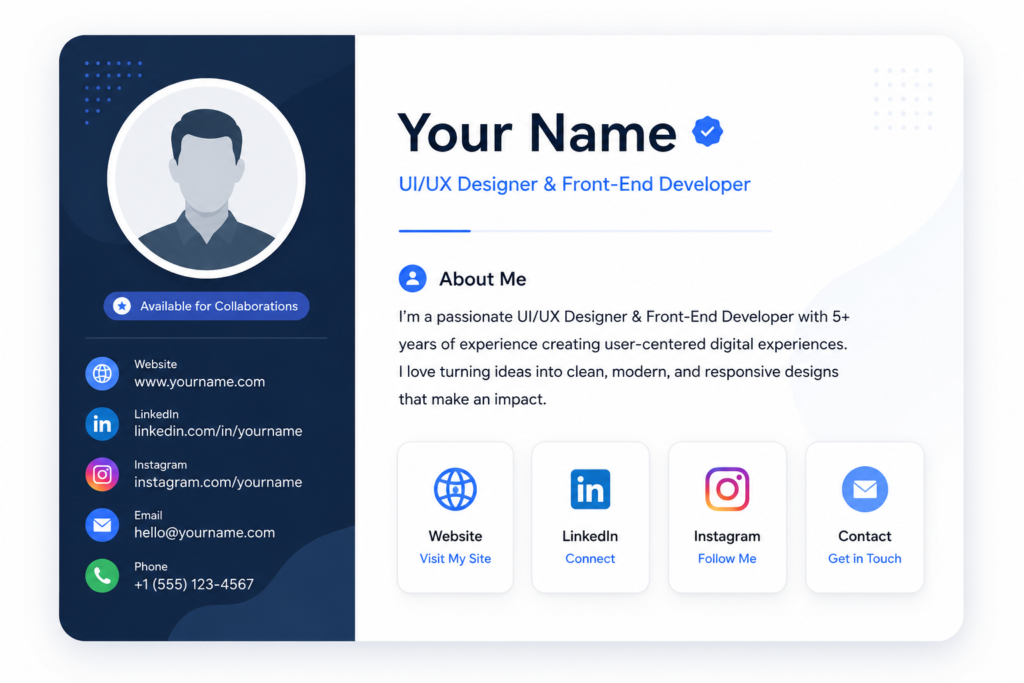
Google People Card was a digital profile feature introduced by Google to help individuals showcase their professional identity directly in Google Search. Often referred to as Add Me to Search, it allowed users to create a simple profile containing their name, profession, profile photo, website, social media links, and a short biography.
The primary objective of this feature was to make it easier for people to establish an online presence, especially those who did not yet have a personal website or strong visibility in search results. It was particularly popular among freelancers, consultants, influencers, students, entrepreneurs, and professionals looking to improve their personal branding.
Unlike a traditional business listing, a Google People Card focused on an individual’s identity rather than a company or physical location. When someone searched for your name, your People Card could appear near the top of the search results, making it easier for others to discover your professional information.
Typical information included in a Google People Card included:
- Full name
- Profile photo
- Occupation
- Short biography
- Website or portfolio
- Social media profiles
- Contact details (optional)
- Location
At the time of its launch, Google People Card provided an easy way for individuals to create a digital identity without investing in a website. However, as Google’s search ecosystem evolved, the company shifted its focus toward more reliable and authoritative sources of information.
What Is Google People Card?
Google People Card was a digital profile feature introduced by Google to help individuals showcase their professional identity directly in Google Search. Often referred to as Add Me to Search, it allowed users to create a simple profile containing their name, profession, profile photo, website, social media links, and a short biography.
The primary objective of this feature was to make it easier for people to establish an online presence, especially those who did not yet have a personal website or strong visibility in search results. It was particularly popular among freelancers, consultants, influencers, students, entrepreneurs, and professionals looking to improve their personal branding.
Unlike a traditional business listing, a Google People Card focused on an individual’s identity rather than a company or physical location. When someone searched for your name, your People Card could appear near the top of the search results, making it easier for others to discover your professional information.
Typical information included in a Google People Card included:
- Full name
- Profile photo
- Occupation
- Short biography
- Website or portfolio
- Social media profiles
- Contact details (optional)
- Location
At the time of its launch, Google People Card provided an easy way for individuals to create a digital identity without investing in a website. However, as Google’s search ecosystem evolved, the company shifted its focus toward more reliable and authoritative sources of information.
Is Google People Card Still Available in 2026?
The short answer is no.
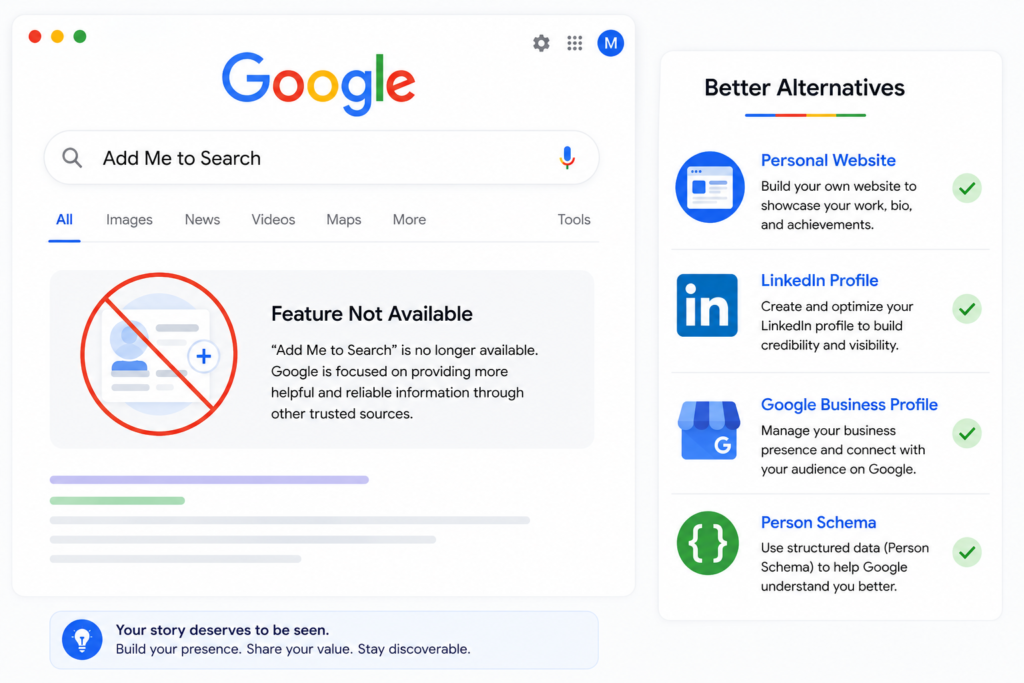
Google People Card is no longer available for most users, and the Add Me to Search feature has been discontinued in many regions. If you’ve tried searching for terms like “Add Me to Search,” “Create Google People Card,” or “Edit My People Card,” you’ve probably noticed that the option no longer appears.
This change has caused confusion because many older tutorials still describe the original setup process. In reality, the issue isn’t with your Google account or device—the feature itself is no longer widely supported.
Although Google has not made a broad public announcement explaining every detail of the retirement, the company has gradually removed access for new users and significantly reduced support for existing People Cards. As a result, relying on this feature is no longer a practical strategy for building your online presence.
Instead, Google now gives more importance to trusted websites, verified professional profiles, structured data, and high-quality content. These signals help the search engine better understand who you are and what expertise you offer.
Important Update: If you’re looking for ways to improve your visibility in Google Search today, focus on building a professional website, optimizing your LinkedIn profile, implementing Person Schema, and publishing helpful content instead of searching for the discontinued Add Me to Search feature.
Why Did Google Discontinue Google People Card?
While Google has not released a detailed official explanation, several industry observations help explain why the feature gradually disappeared.
One possible reason is the increasing challenge of maintaining profile quality. Since People Cards relied on user-submitted information, ensuring accuracy and preventing spam became more difficult over time. Fake identities, misleading profiles, and low-quality submissions could affect the trustworthiness of search results.
Another factor is Google’s broader shift toward understanding people through authoritative sources rather than self-created profile cards. Today, Google’s algorithms use structured data, verified websites, professional profiles, consistent brand mentions, and high-quality content to determine credibility and expertise.
This approach aligns with Google’s focus on Experience, Expertise, Authoritativeness, and Trust (EEAT). Rather than depending on a single profile, Google now evaluates a person’s digital presence across multiple trusted sources.
As search technology continues to evolve, especially with AI-powered search experiences, building a complete online identity through your own website, professional profiles, and valuable content has become far more effective than relying on a discontinued feature.
Why Is Add Me to Search Not Working?
One of the most frequently searched questions today is, “Why is Add Me to Search not working?” If you’ve been trying to create or edit a Google People Card without success, you’re not alone.
The primary reason is simple: Google has discontinued the Google People Card feature for most users. This means that searching for terms like “Add Me to Search,” “Create Google People Card,” or “Edit My People Card” will no longer display the setup option for many Google accounts.
However, there are a few situations that may also contribute to the issue.
Common Reasons Why Add Me to Search Is Not Working
- Google People Card is no longer supported for most users.
- The feature has been phased out in your country or region.
- Existing People Cards may no longer appear in search results.
- Older tutorials provide outdated instructions that no longer work.
- Google now prioritizes trusted websites, structured data, and authoritative profiles instead of People Cards.
If you’re still following articles published in 2020 or 2021, you’ll likely encounter instructions that no longer match Google’s current search experience.
Pro Tip: Instead of spending time trying to restore a discontinued feature, invest your efforts in creating a strong online presence through your own website, professional profiles, and helpful content. These assets remain under your control and continue to deliver long-term SEO value.
Best Google People Card Alternatives in 2026
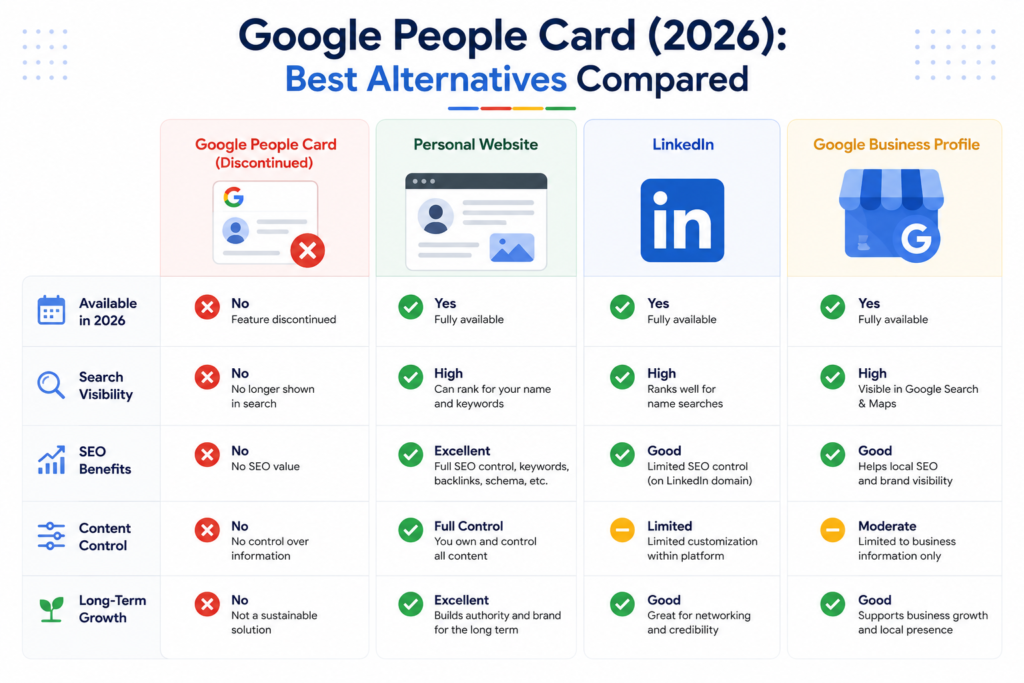
Although Google People Card is no longer available, building a strong online identity is easier and more effective than ever. Instead of relying on a single Google feature, today’s personal branding strategy combines several trusted platforms that work together to improve your visibility in search results.
The following alternatives are recommended for professionals, freelancers, consultants, students, creators, and business owners who want to establish a credible online presence.
| Alternative | Best For | Long-Term Value |
|---|---|---|
| Personal Website | Everyone | ⭐⭐⭐⭐⭐ |
| LinkedIn Profile | Professionals & Job Seekers | ⭐⭐⭐⭐⭐ |
| Google Business Profile | Businesses & Consultants | ⭐⭐⭐⭐⭐ |
| Person Schema | Website Owners | ⭐⭐⭐⭐⭐ |
| Portfolio Platforms | Designers & Developers | ⭐⭐⭐⭐☆ |
| Helpful Blog Content | Experts & Businesses | ⭐⭐⭐⭐⭐ |
| Guest Posting | Personal Branding | ⭐⭐⭐⭐☆ |
Each of these methods strengthens your digital identity and helps search engines understand who you are, what you do, and why users should trust your expertise.
Build a Professional Personal Website
If you want complete control over your online identity, a personal website is the most valuable investment you can make.
Unlike social media platforms or discontinued Google features, your website belongs to you. You control the design, content, branding, and user experience without depending on third-party platforms.
A well-designed website also serves as a central hub where visitors can learn about your experience, services, achievements, portfolio, and contact information.
Essential Pages for a Personal Website
- Home
- About
- Portfolio
- Services
- Blog
- Testimonials
- Contact
Publishing helpful articles on your website further strengthens your authority and helps search engines recognize your expertise over time.
For professionals, freelancers, and entrepreneurs, a website is no longer optional—it’s the foundation of modern personal branding.
Optimize Your LinkedIn Profile
LinkedIn has become one of the strongest personal branding platforms on the internet. A well-optimized LinkedIn profile frequently appears on the first page of Google search results, especially when someone searches for your name.
To improve your LinkedIn visibility, focus on creating a complete and professional profile.
LinkedIn Optimization Checklist
- Use a professional profile photo.
- Write a keyword-rich headline.
- Complete your work experience.
- Highlight your skills and certifications.
- Request recommendations from colleagues or clients.
- Customize your LinkedIn URL.
- Keep your profile updated regularly.
Consistent activity, such as publishing posts and engaging with industry discussions, can also improve your credibility and expand your professional network.
Add Person Schema to Your Website
One of the biggest differences between the old Google People Card and modern SEO is the use of structured data.
Person Schema is a type of structured data that helps search engines understand information about an individual, including their name, profession, website, organization, and social profiles.
While adding Person Schema doesn’t guarantee a Knowledge Panel, it provides Google with consistent information that supports identity recognition across the web.
Information Commonly Included in Person Schema
- Full Name
- Job Title
- Organization
- Website
- Social Media Profiles
- Profile Image
- Email (optional)
- Address (optional)
When combined with a professional website and authoritative content, Person Schema strengthens your website’s semantic understanding and contributes to better search visibility.
Create a Google Business Profile (For Businesses and Consultants)
If you run a business, agency, consultancy, or local service, a Google Business Profile is a much better option than the discontinued Google People Card.
A Business Profile helps customers find your business on Google Search and Google Maps while providing access to valuable features such as reviews, business hours, directions, phone calls, and website links.
Benefits of Google Business Profile
- Improve local search visibility.
- Appear on Google Maps.
- Collect customer reviews.
- Display contact details.
- Share business updates.
- Build trust with potential customers.
For local businesses, maintaining an accurate and active Google Business Profile is one of the most effective ways to improve local SEO.
Expert Insight
Many people assume Google People Card was the only way to appear in Google Search. In reality, search visibility today depends on a combination of trusted signals. A professional website, optimized LinkedIn profile, structured data, consistent branding, and helpful content work together to build credibility over time.
Rather than searching for ways to revive a discontinued feature, focus on creating digital assets that you own and control. This strategy not only improves your online presence but also aligns with Google’s current approach to evaluating expertise, authority, and trust.
How to Build Your Personal Brand on Google in 2026
While Google People Card helped users create a simple online profile, today’s search ecosystem is much more advanced. Google now evaluates your overall digital presence rather than relying on a single feature.
Whether you’re a freelancer, entrepreneur, consultant, job seeker, content creator, or business owner, building your personal brand requires consistency across multiple platforms.
Think of your online presence as a complete ecosystem where every platform supports your credibility and helps search engines understand who you are.
Below is a practical roadmap that works in 2026 and beyond.
Step 1: Register Your Own Domain Name
Your domain name is your digital identity.
Whenever possible, choose a domain that includes your own name or your business name. This makes it easier for people to remember and helps create a consistent brand across different platforms.
Examples:
- yourname.com
- yourbusiness.com
- yourbrand.in
Owning a domain also gives you full control over your online presence without depending on third-party platforms.
Step 2: Create a Professional Website
A professional website acts as the foundation of your digital identity.
Instead of relying on social media profiles alone, create a website that highlights your expertise, experience, achievements, and services.
Essential pages include:
- Home
- About
- Services
- Portfolio
- Blog
- Contact
- Privacy Policy
Adding case studies, testimonials, certifications, and frequently asked questions further strengthens trust and helps visitors understand your expertise.
Step 3: Maintain Consistent Branding
One of the most overlooked aspects of personal branding is consistency.
Use the same:
- Name
- Profile photo
- Job title
- Company name
- Website URL
- Email address
across your website, LinkedIn, GitHub, Behance, YouTube, and other professional platforms.
Consistent information makes it easier for search engines to verify your identity and improves trust with visitors.
Step 4: Publish Helpful Content Regularly
Google rewards websites that consistently publish useful, original, and experience-based content.
Instead of writing only promotional content, focus on solving real problems for your audience.
Examples include:
- How-to guides
- Tutorials
- Industry updates
- Case studies
- Portfolio breakdowns
- Frequently asked questions
- Expert tips
Publishing high-quality articles also helps build topical authority, which is an important ranking factor for competitive keywords.
Step 5: Earn High-Quality Backlinks
Backlinks remain one of Google’s strongest ranking signals.
Focus on earning links from relevant and trustworthy websites instead of buying low-quality backlinks.
Good sources include:
- Guest posts
- Industry blogs
- News websites
- Professional directories
- Educational websites
- Business associations
Quality always matters more than quantity.
Step 6: Optimize for EEAT
Google evaluates websites using the principles of:
Experience
Show real-world knowledge and practical examples.
Expertise
Publish content written by professionals with subject knowledge.
Authoritativeness
Earn mentions and backlinks from trusted websites.
Trustworthiness
Keep your website secure, transparent, and regularly updated.
For businesses, these signals help improve credibility and may contribute to stronger search visibility over time.
Common Mistakes to Avoid
Many professionals invest time in building an online presence but unknowingly make mistakes that limit their visibility.
Here are some of the most common issues to avoid.
Using Inconsistent Information
Different names, job titles, or contact details across platforms can confuse both users and search engines.
Always maintain consistency.
Ignoring Your Website
A LinkedIn profile alone isn’t enough.
Your website serves as your primary digital asset and should remain up to date.
Publishing Thin Content
Short, generic, AI-generated articles without real value rarely perform well.
Instead, create comprehensive, experience-based content that genuinely helps readers.
Skipping Structured Data
Many website owners overlook Schema Markup.
Structured data improves how search engines understand your content and supports richer search results.
Not Updating Information
Outdated portfolios, expired projects, broken links, and old achievements reduce credibility.
Review your website every few months.
Google People Card vs Modern Personal Branding
Today’s personal branding strategy extends far beyond a single Google feature.
| Feature | Google People Card | Modern Personal Branding |
|---|---|---|
| Status | Discontinued | Active |
| Control | Limited | Complete |
| Website Integration | No | Yes |
| SEO Benefits | Limited | Excellent |
| Long-Term Value | Low | High |
| Supports EEAT | No | Yes |
| Content Marketing | No | Yes |
| Backlink Opportunities | No | Yes |
Instead of depending on a discontinued feature, professionals should build long-term authority using websites, content, structured data, and trusted professional platforms.
Expert Tips to Improve Your Google Visibility
Building a strong online presence takes time, but these proven practices can help accelerate your progress.
Create Original Content
Share practical experiences, case studies, and insights rather than repeating information found elsewhere.
Build Topic Authority
Instead of publishing unrelated articles, focus on one niche and create multiple high-quality resources around it.
Improve Page Experience
Fast loading times, responsive design, and intuitive navigation contribute to a better user experience and stronger SEO.
Add Internal Links
Connect related articles and service pages naturally throughout your website.
This helps visitors discover more content while improving crawlability.
Keep Your Information Updated
Review and refresh important pages regularly to ensure accuracy and relevance.
Fresh content signals that your website is actively maintained.
Pro Tip
Google no longer depends on a single profile like People Card to understand your identity. Instead, it combines information from your website, structured data, social profiles, authoritative mentions, and helpful content. The stronger these signals are, the more trustworthy your online presence becomes.
Why Your Personal Website Matters More Than Ever
A personal website is more than just an online portfolio—it’s the foundation of your digital identity.
Unlike social media platforms, where algorithms and policies can change, your website remains an asset you own and control. It gives you the freedom to showcase your expertise, publish original content, display your work, and build lasting credibility.
For freelancers, consultants, creators, and businesses, a website also becomes the central hub that connects all other online platforms, making it easier for search engines and potential clients to understand your professional background.
If you’re serious about improving your visibility in Google Search, investing in a professional website is one of the smartest long-term decisions you can make.
Frequently Asked Questions
1. What is Google People Card?
Google People Card was a feature introduced by Google that allowed individuals to create a public profile, often called Add Me to Search. It displayed basic professional information such as name, occupation, website, and social media links directly in Google Search. The feature has been discontinued for most users.
2. Is Google People Card still available in 2026?
No. Google People Card is no longer available for most users. Google gradually discontinued the feature starting in 2024, and new People Cards can no longer be reliably created, edited, or displayed in search results.
3. Why is Add Me to Search not working?
The most common reason is that Google has retired the feature. If you cannot create or edit a Google People Card, it is usually due to the service being discontinued rather than a problem with your Google account or device.
4. Can I still create a Google People Card?
For most users, the answer is no. Google no longer provides a reliable option to create new People Cards. Instead, professionals should focus on building a strong online presence through websites, LinkedIn, structured data, and helpful content.
5. What replaced Google People Card?
Google has not introduced a direct replacement. Today, search visibility depends on a combination of personal websites, LinkedIn profiles, Google Business Profiles, Person Schema, authoritative content, and consistent online branding.
6. Is Google Business Profile the same as Google People Card?
No. Google Business Profile is designed for businesses and local services, while Google People Card was intended for individuals. Business Profiles continue to be actively supported and provide features such as reviews, maps, business hours, and customer interactions.
7. Does a personal website help me appear in Google Search?
Yes. A well-optimized website gives Google reliable information about your identity, expertise, and services. Combined with structured data and quality content, it can significantly improve your online visibility over time.
8. What is Person Schema?
Person Schema is structured data that helps search engines understand details about an individual, including their name, profession, website, organization, and social media profiles. It supports better search understanding and strengthens your website’s semantic SEO.
9. Can LinkedIn replace Google People Card?
LinkedIn is one of the best alternatives for professionals. A complete and active LinkedIn profile often ranks well in Google Search and helps strengthen your online credibility.
10. How can freelancers improve their personal branding?
Freelancers should create a professional website, showcase their portfolio, publish helpful articles, optimize LinkedIn, collect client testimonials, and build quality backlinks. These strategies create long-term authority and improve search visibility.
11. How long does it take to build an online presence?
There is no fixed timeline. Depending on your niche, competition, and consistency, noticeable improvements can take several months. Regularly publishing helpful content and maintaining accurate information across platforms can gradually strengthen your visibility.
12. Does publishing blogs help personal branding?
Yes. High-quality blog posts demonstrate expertise, answer users’ questions, and help build topical authority. Over time, they can attract organic traffic, backlinks, and improve your reputation in your industry.
13. Can I appear in Google Search without a website?
It is possible through platforms like LinkedIn or Google Business Profile, but having your own website provides greater control, stronger branding, and better long-term SEO benefits.
14. What is the best personal branding strategy in 2026?
The most effective strategy combines a professional website, optimized LinkedIn profile, structured data, helpful content, consistent branding, and quality backlinks. Together, these elements create a trusted digital presence.
15. Is Google People Card coming back?
Google has not announced any plans to restore the feature. It is best to focus on sustainable personal branding methods that are actively supported today.
Conclusion
Google People Card was once a useful feature for improving personal visibility in search results, but it is no longer a practical option. As Google’s search algorithms continue to evolve, building a strong online presence now depends on creating trustworthy digital assets that you own and control.
A professional website, optimized LinkedIn profile, Google Business Profile (for businesses), structured data, and consistently published helpful content are far more effective than relying on a discontinued feature.
Instead of looking for ways to bring back Add Me to Search, invest your time in strategies that continue to deliver long-term value. By focusing on quality content, user experience, and consistent branding, you’ll create a digital presence that remains valuable regardless of future changes to Google’s search features.
Need Help Building Your Online Presence?
Whether you’re a freelancer, startup, consultant, or established business, creating a professional online identity requires more than just a website. It involves thoughtful design, technical SEO, structured data, fast performance, and content that builds trust.
At Masamind, we design SEO-friendly websites that help businesses and professionals establish a strong digital presence. From responsive web design and WordPress development to eCommerce solutions and performance optimization, our goal is to create websites that support long-term growth and visibility.
Let’s Connect
Have a project in mind or need a stunning website?